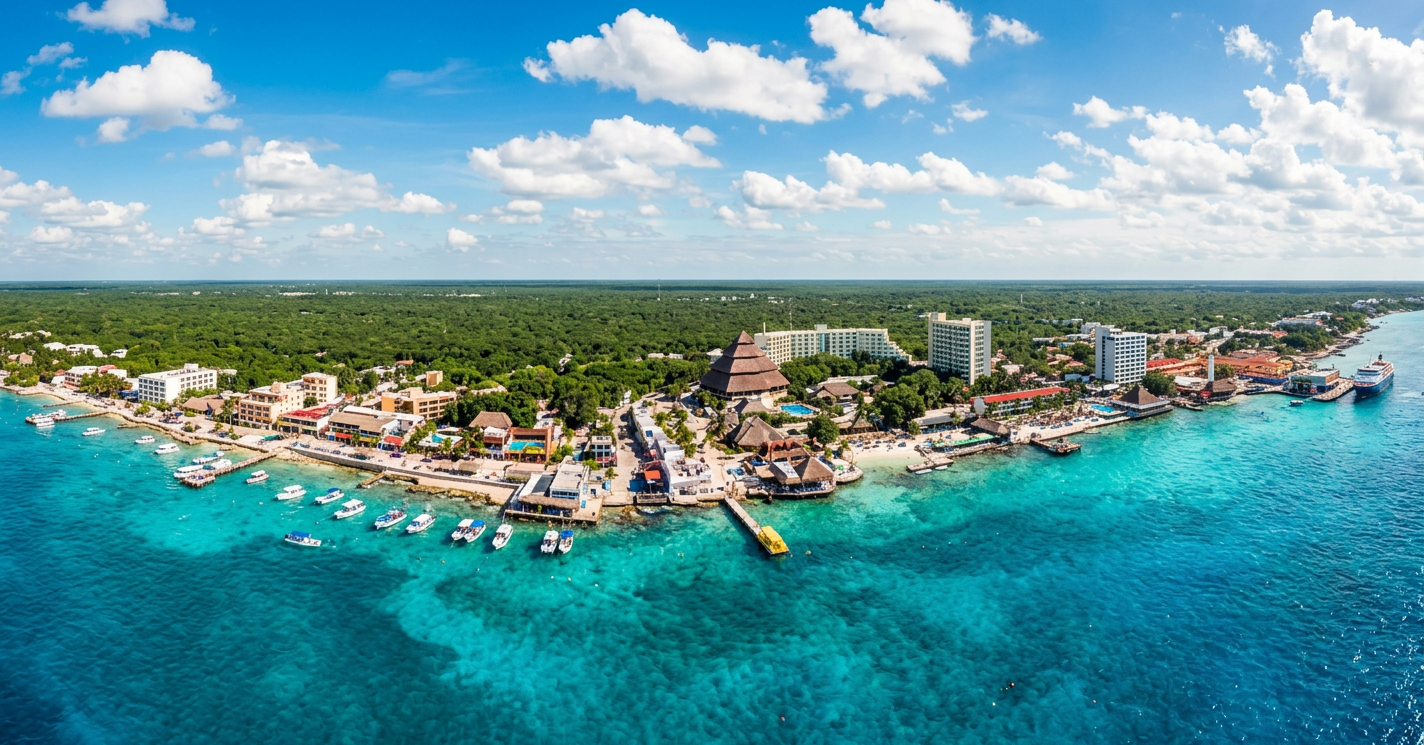
Cozumel Island Mexico
We decided to go to Mexico for Xmas vacation 1989-90. We started on the island of Cozumel. It was me, my wife and my younger son. Our older son was away at college in New Mexico and couldn’t join.
I thought this was a good place to start because one of the local birders at home had suggested it. I think we stayed at the Coralia Boutique Hotel Cozumel but i am not sure. Oh, well. Yes I brought my binoculars and A Field Guide to the Birds of Mexico by Ernest P. Edwards Hardcover 1989.
We arrived on the 19th of December for a weeks stay. The next day, I already had a new family.
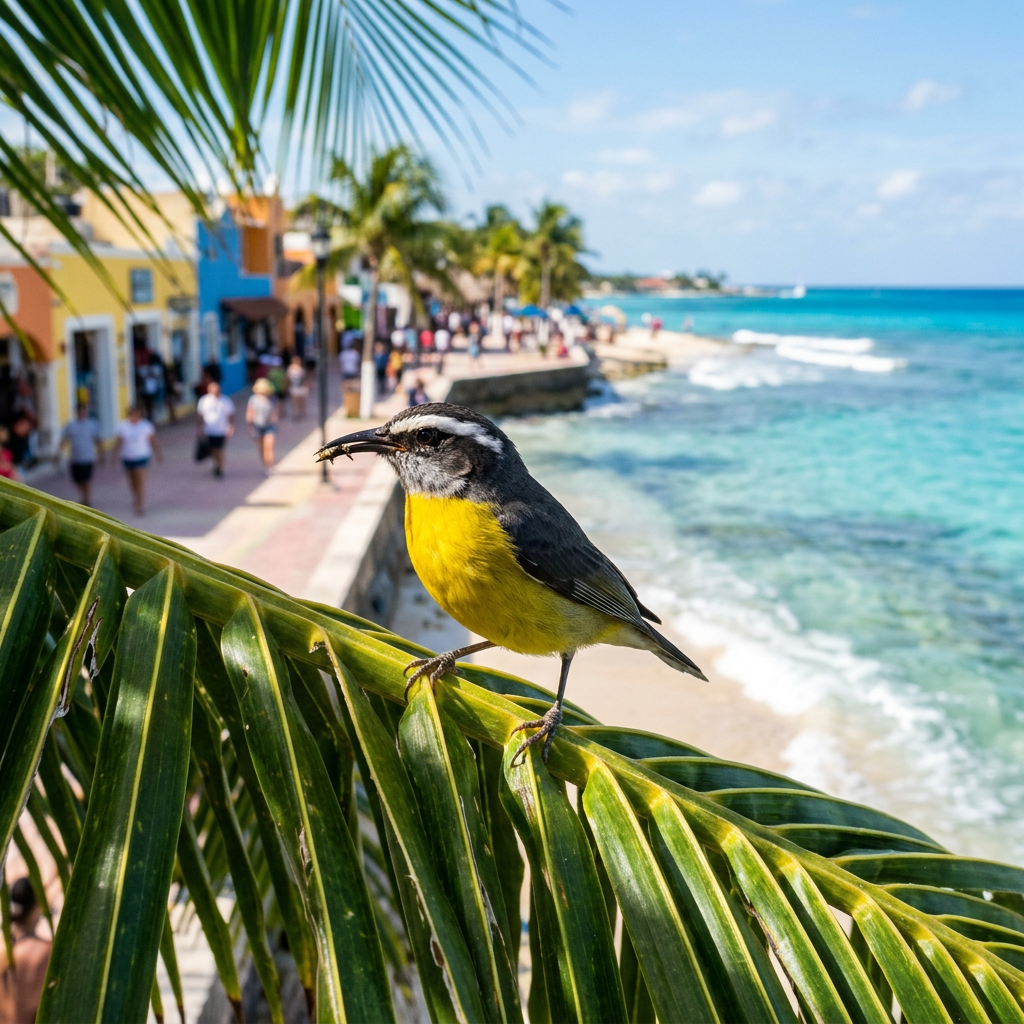
In the palm trees on the beachfront promenade was a Bananaquit (Coereba flaveola) of the Bananaquit (Coerebidae) family. This monotypic family has been in and out of the Tanagers & Allies (Thraupidae) family and that is where it is today.
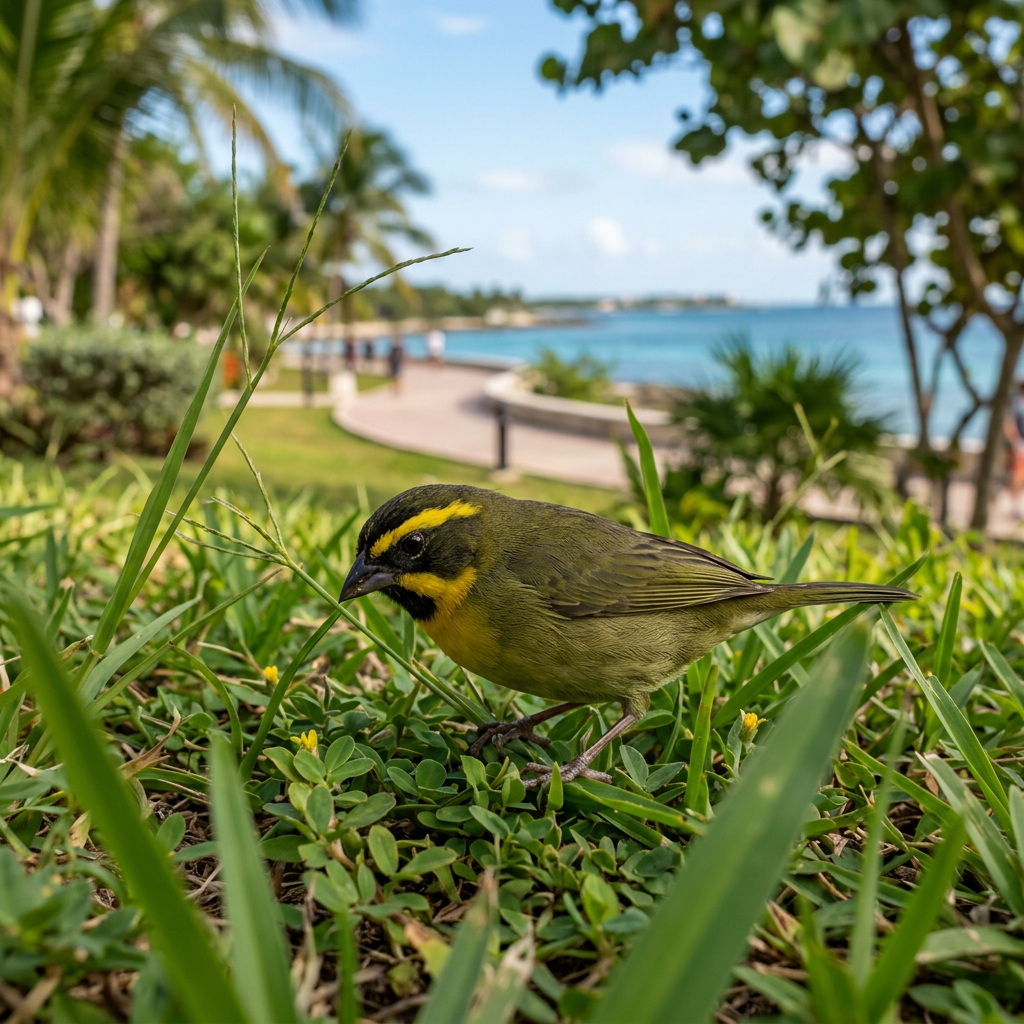
Further along the promenade, in a small park was a Yellow-faced Grassquit (Tiaris olivaceus). This bird moved through a number of families but is now in the same family as the Bananaquit.
We continued on Cozumel for a full week. I did not see any further families, but did have a grand time with my family and with birding. I saw a total of 68 birds, 19 of which were new birds for me. In addition, three of them were endemic to Cozumel Island.
Cancun
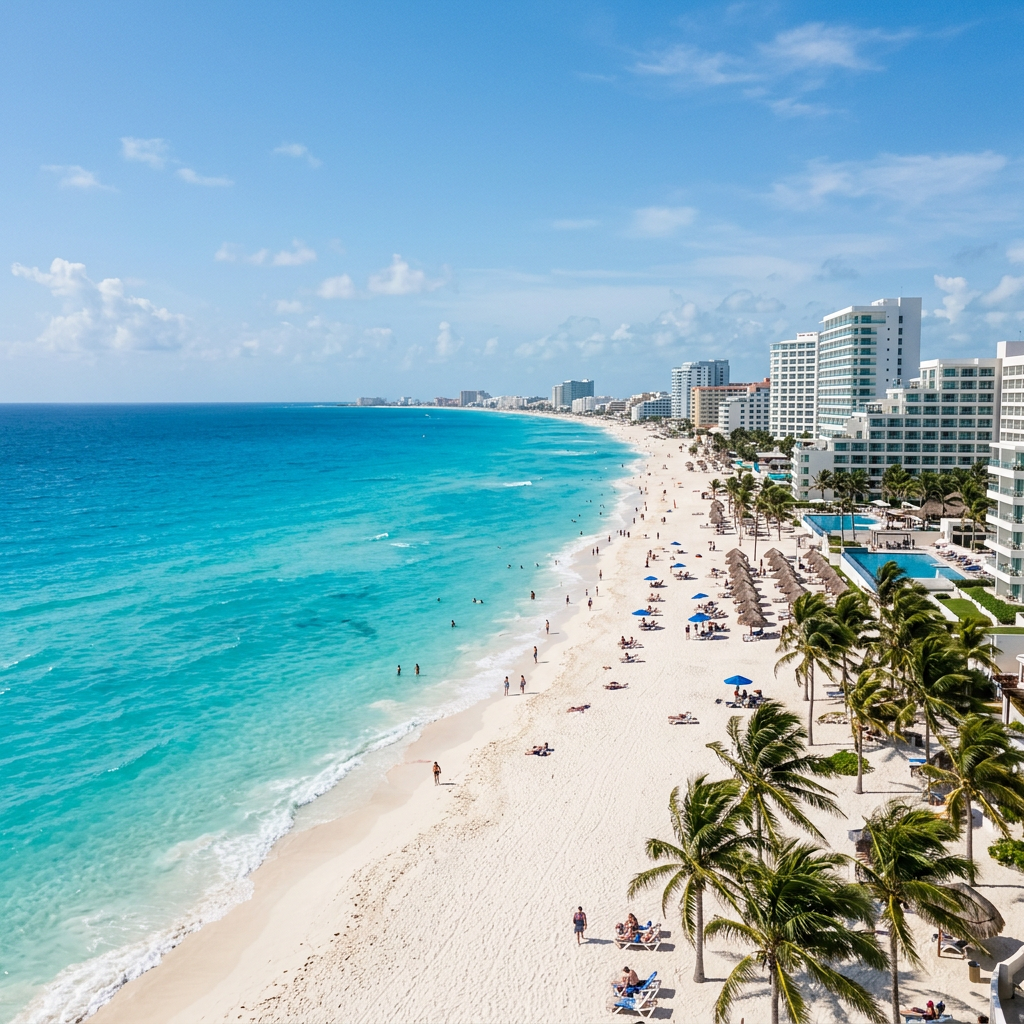
We then went on to stay in Cancun where my son could really enjoy the beach. We used this location to do day trips to various interesting locations nearby.
Archeological site of Kohunlich
On the 27th of December we headed off to the Archeological site of Kohunlich
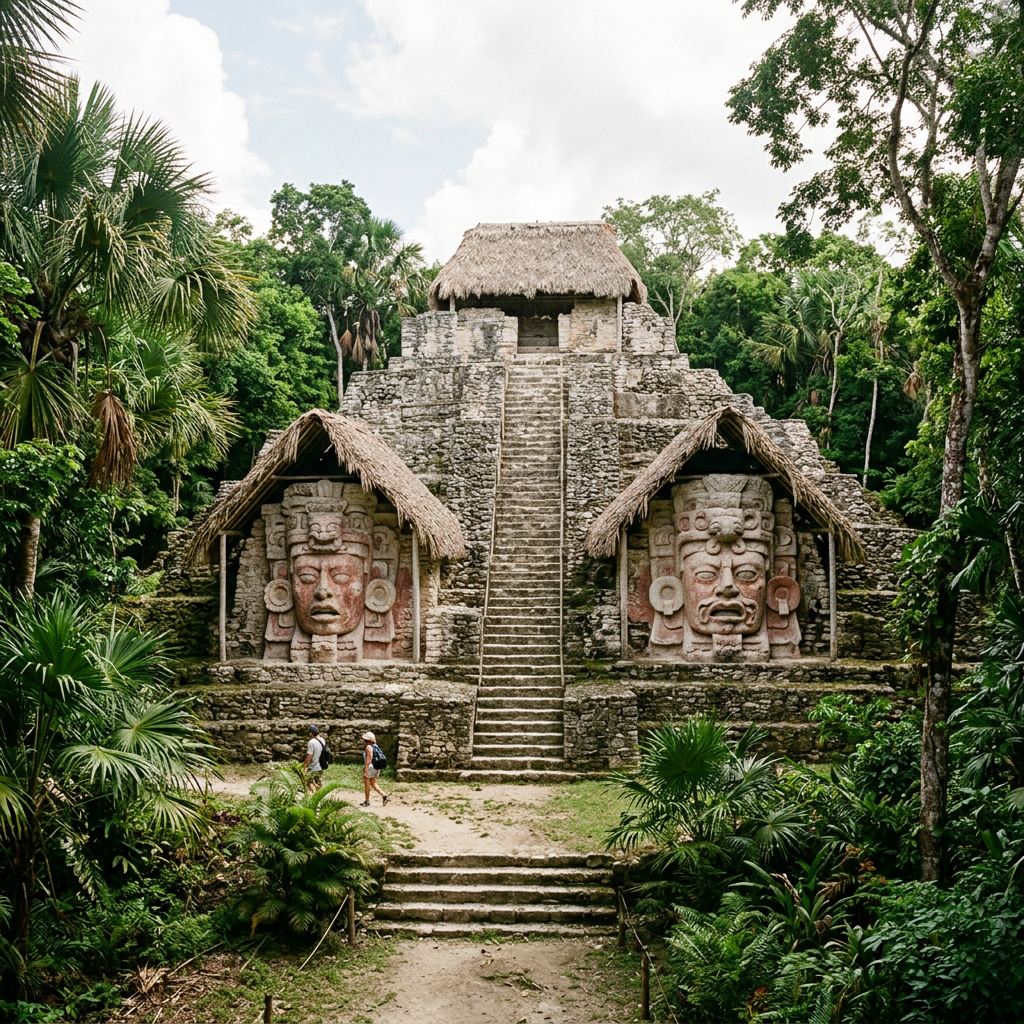
At this site, in the surrounding jungle I saw four new families, three of which are found only in the neotropics.
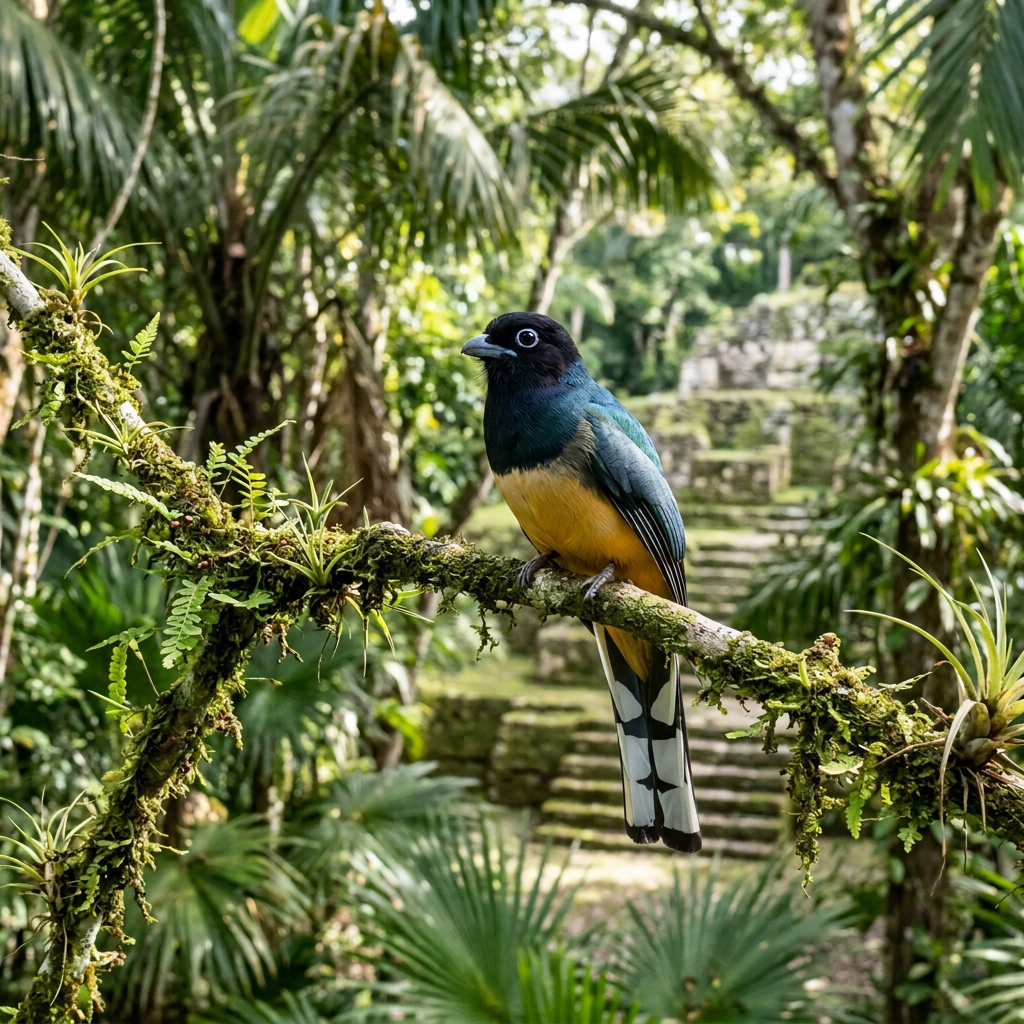
As we walked around the paths at this wondrous site, we came across Black-headed Trogon (Trogon melanocephalus) of the worldwide Trogons (Trogonidae) family. A very good looking bird.
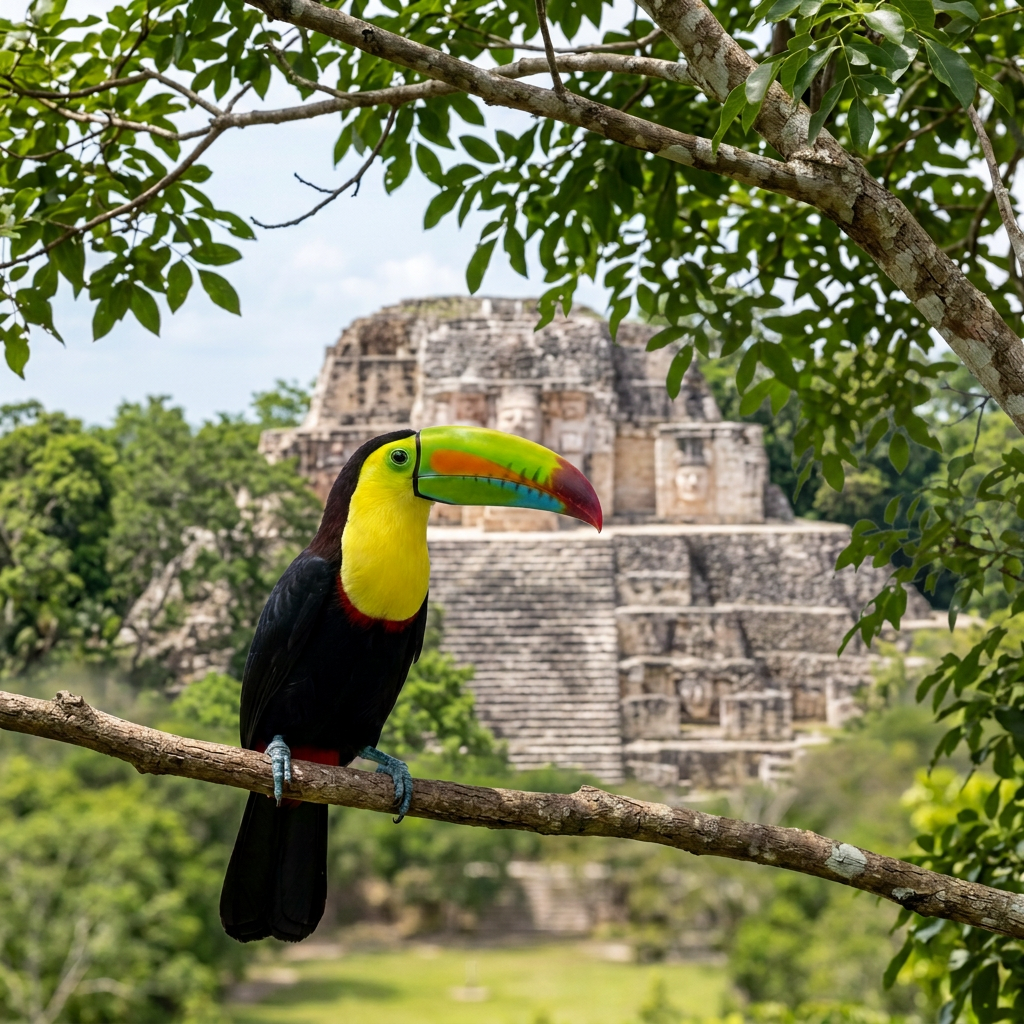
And then, right out in the open, near to the structure, we came upon the Keel-billed Toucan (Ramphastos sulfuratus) of the Neotropic Toucans ( Ramphastidae) family. That really got my attention. What a bill.
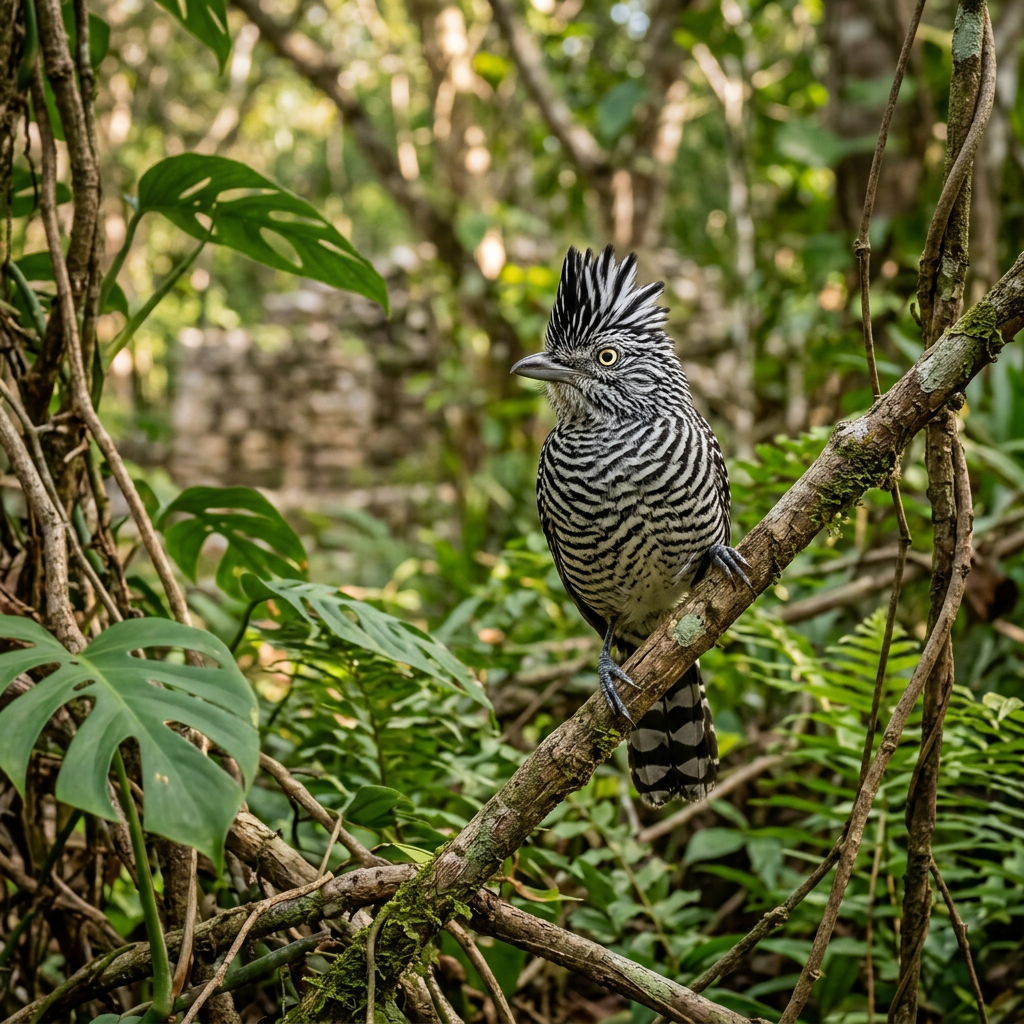
As we walked around the site, we heard a harsh, accelerating “laughing” call coming from down below. There, sticking its head out to see us was a Barred Antshrike (Thamnophilus doliatus) of the Neotropic Typical Antbirds (Thamnophilidae) family. Hard to miss him.
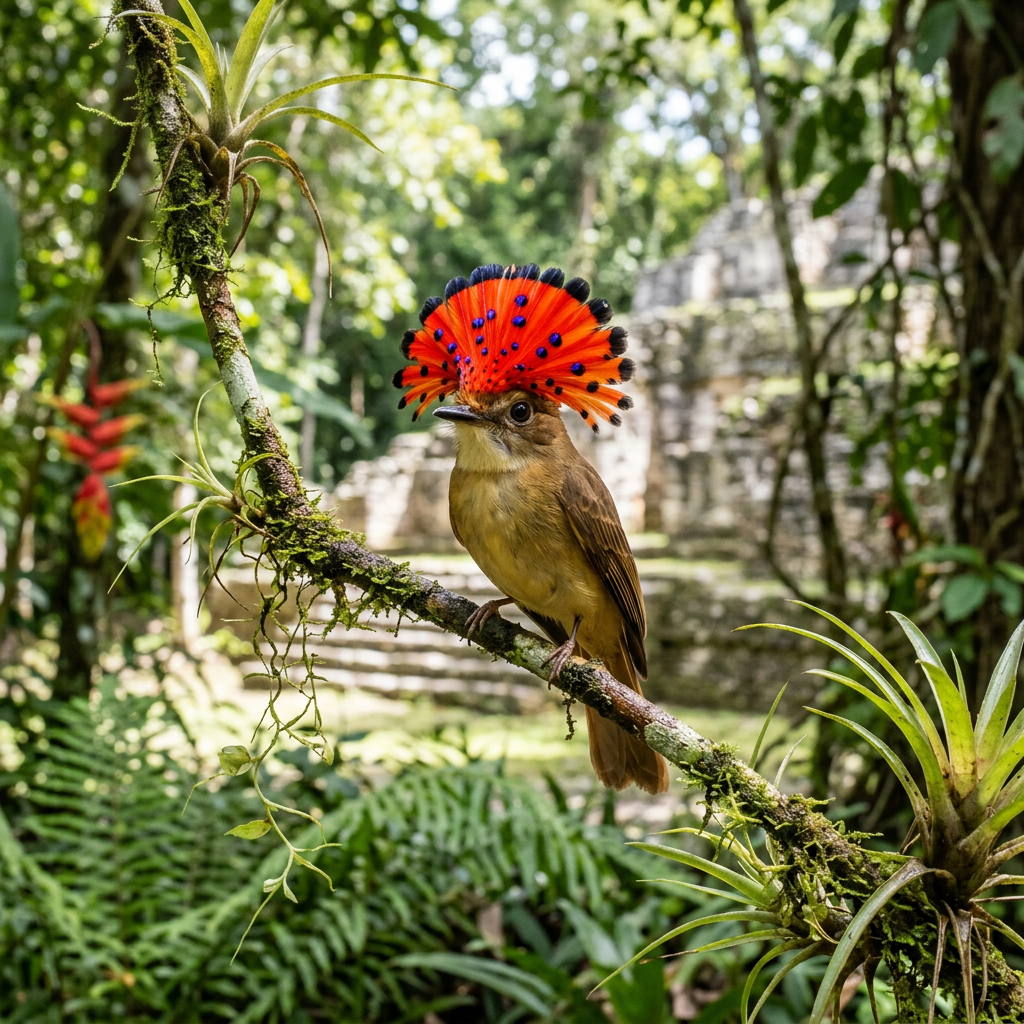
Coming back out of the forest we came upon a bird with a fully deployed crest. It turned out to be the Royal Flycatcher ( Onychorhynchus coronatus) (Now called the Tropical Royal Flycatcher after a split). It is the hotshot member of a family that became to be called Royal Flycatchers and Allies (Onychorhynchidae). At the time it was just a member of the Tyrant Flycatcher family that I had already seen back in the states
Hard to ask for a better day.
We then moved on to Chetumal for a short stay because I wanted to go into Belize
Baboon Sanctuary-Belize
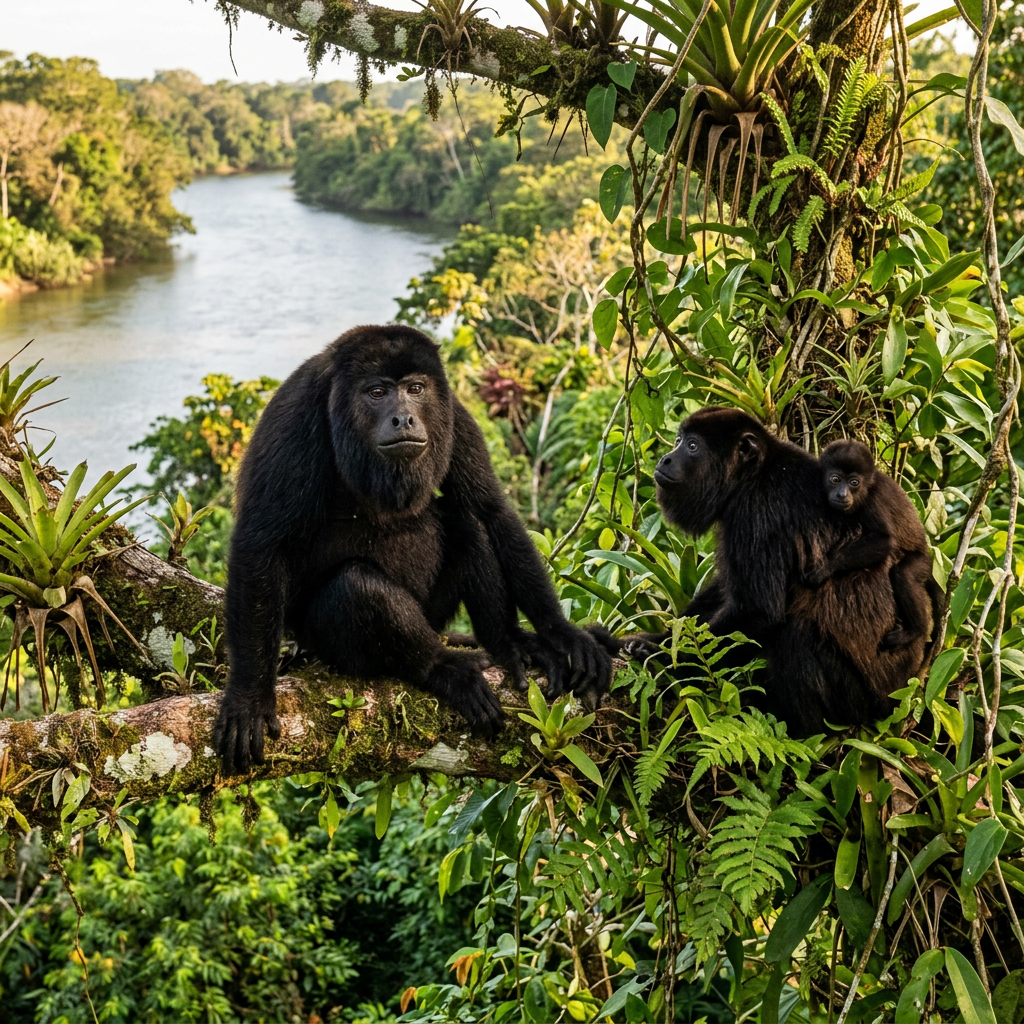
Chetumal is right on the border with Belize, so I crossed the border in my car and headed for the sanctuary. Even though this was the main highway into Belize, it was not in good shape, many sections being dirt only.
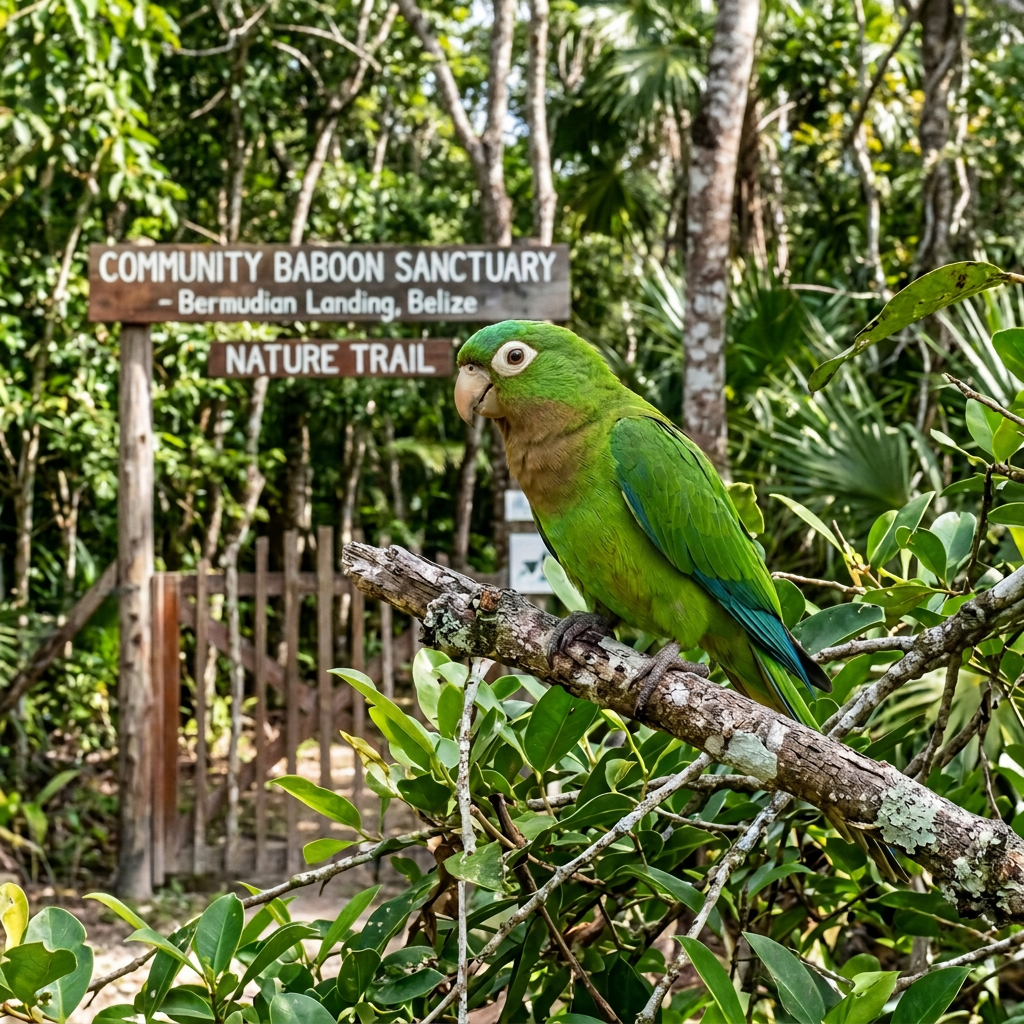
But, I got there in a few hours and was greeted by an Olive-throated Parakeet (Eupsittula nana) of the then worldwide parrot family, and not new for me since I had seen members in Australia. But that worldwide family has since been split up and the parrots in the New World are part of the New World and African Parrots (Psittacidae) family. Yes, new for me.
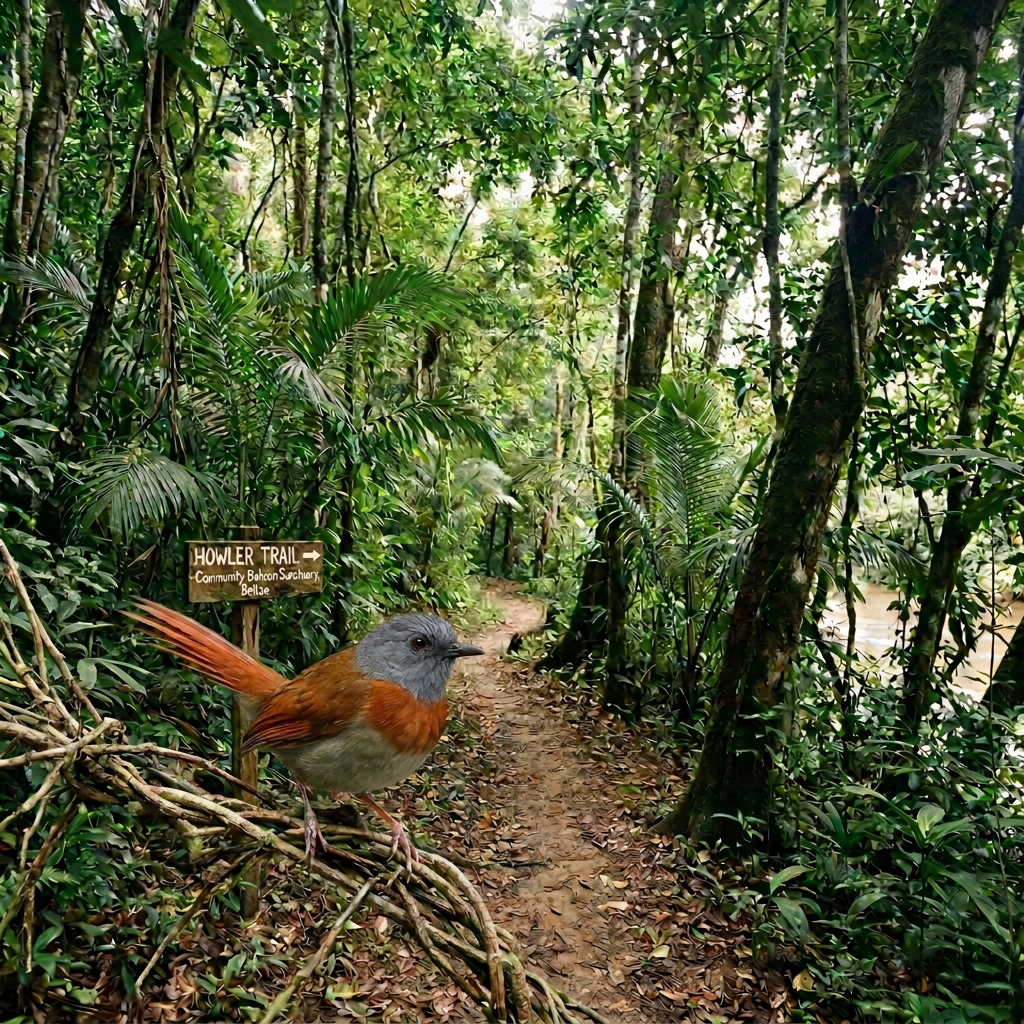
Walking along the path into the forest it was not long before I came across a Rufous-breasted Spinetail (Synallaxis erythrothorax) of the Neotropic Ovenbirds and Woodcreepers (Furnariidae) family. The bird is a member of the Ovenbird subfamily. A little tricky to get a good view.
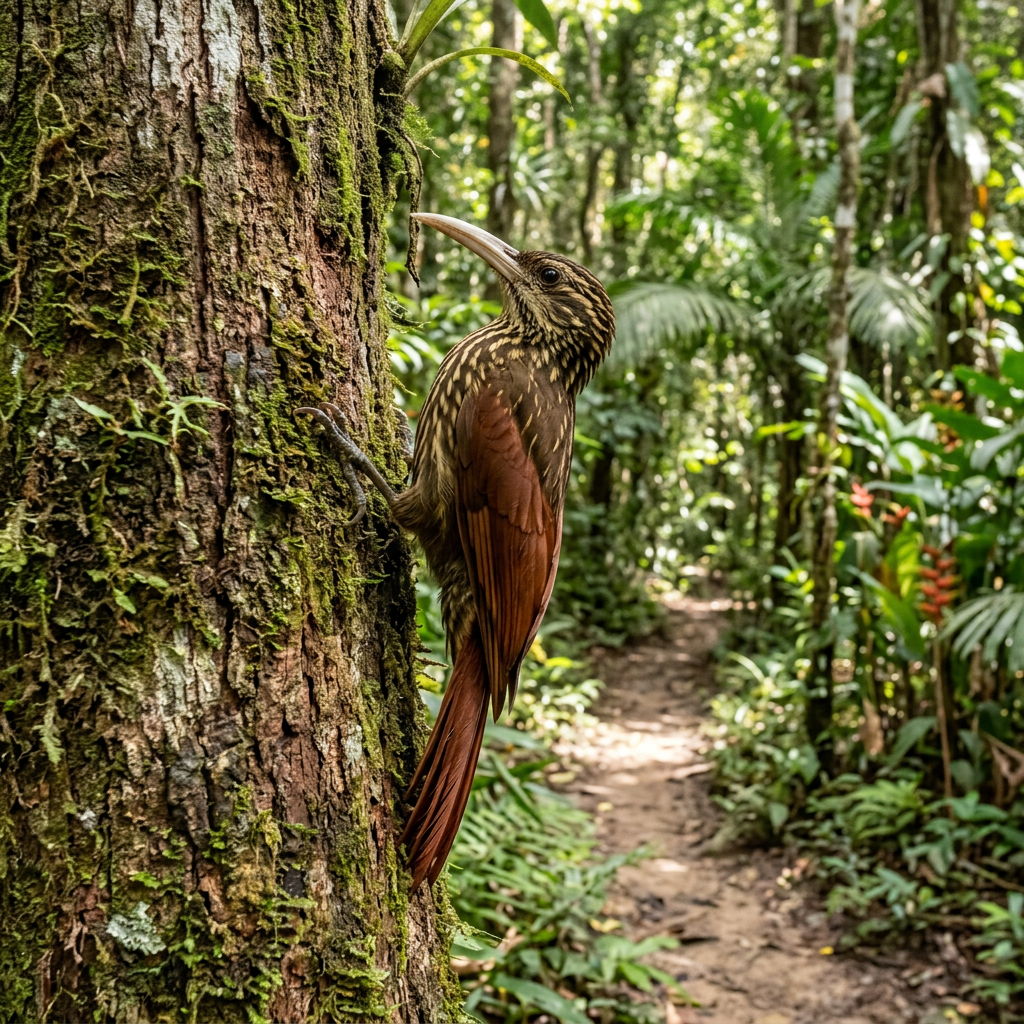
A little further along the trail, climbing up the side of a tree was an Ivory-billed Woodcreeper (Xiphorhynchus flavigaster). At that time it was a member of a separate Woodcreeper (Dendrocolaptidae) family. It has since been merged with the Ovenbirds as seen above.
After a good while birding here, I thought it prudent to head back to Mexico. A good thing I did. Along the way, not too far from the border, I stopped at a pond for some afternoon birding. When I was finished and got into my car, it would not start. Ouch. Now what do I do? Walk to the border and leave my car here?
But the powers of the Universe smiled on me. Along came a local fisherman. Guess what? He had jumper cables in his truck and obliged me with a jump. Wow, am I ever lucky.
I got back to Chetumal. We got up the next day and headed back to Cancun. From there our next adventure was to be at Chichen Itza with a stop off at Los Colorados on the way.
Archeological site of Chichen Itza
After Kohunlich, we were itchy to get to the way bigger site of Chichen Itza. So, on New Year’s day, 1990, we set off. But, I talked my family into letting me take a diversionary route and stop at Los Colorados where we saw American Flamingoes (Phoenicopterus ruber) of the not just Neotropic Flamingos(Phoenicopteridae) family.
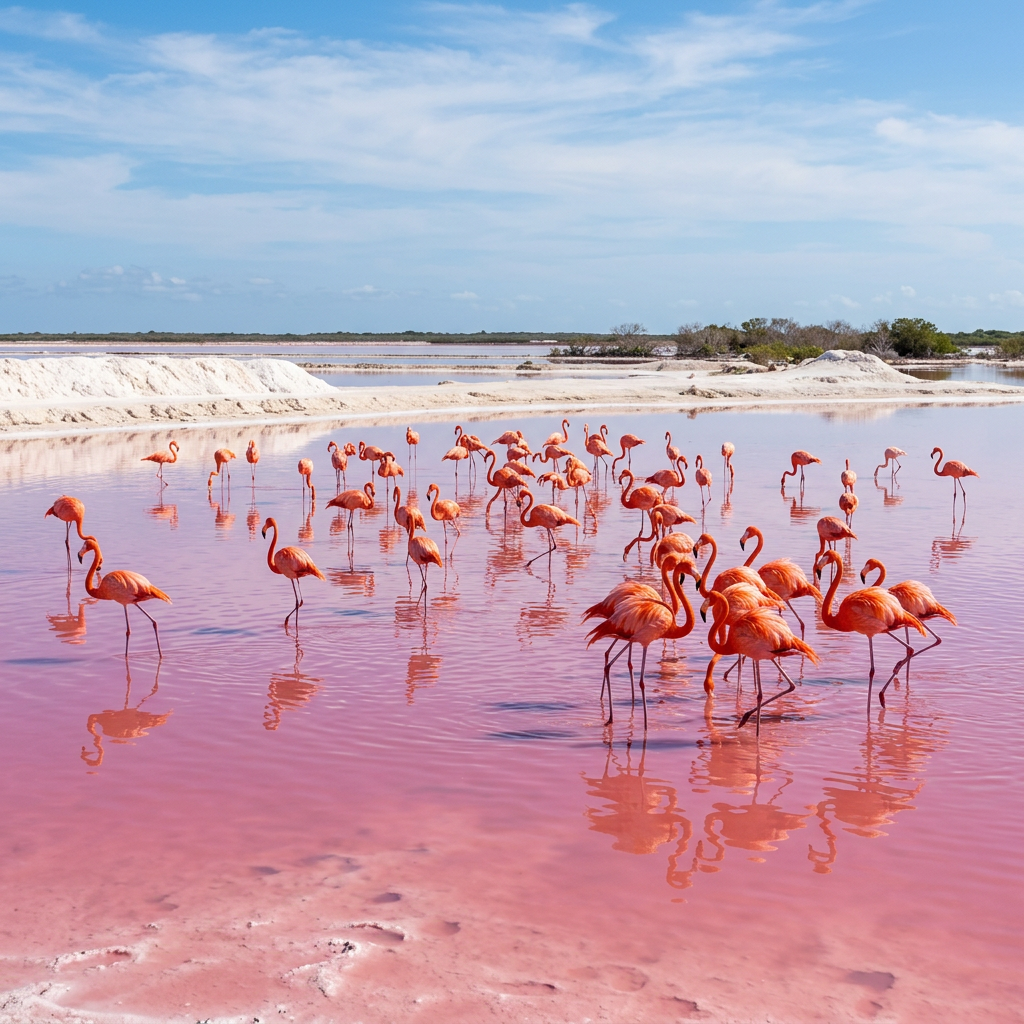
We certainly had no trouble seeing them. What a grand site.
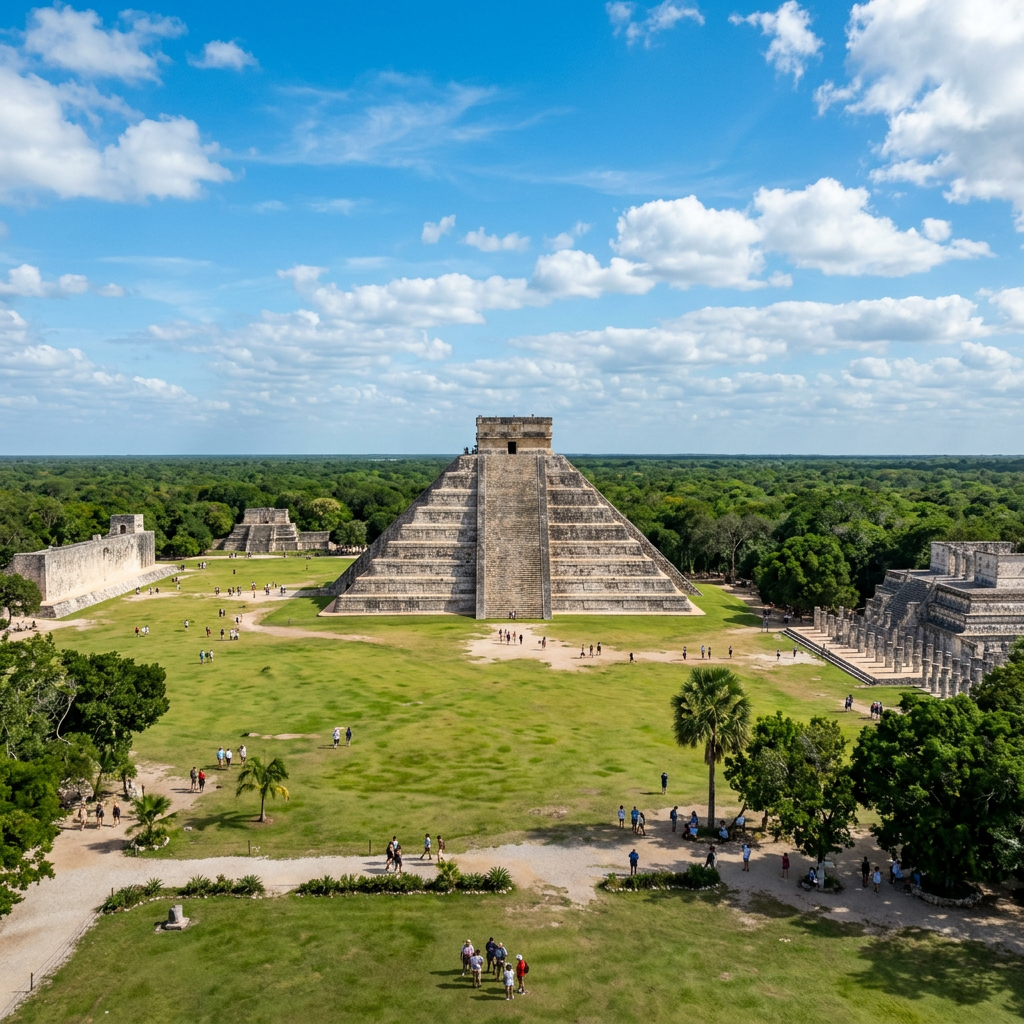
On to the Chichen Itza that my family really wanted to see. And guess what, I saw a couple of new families there as well.
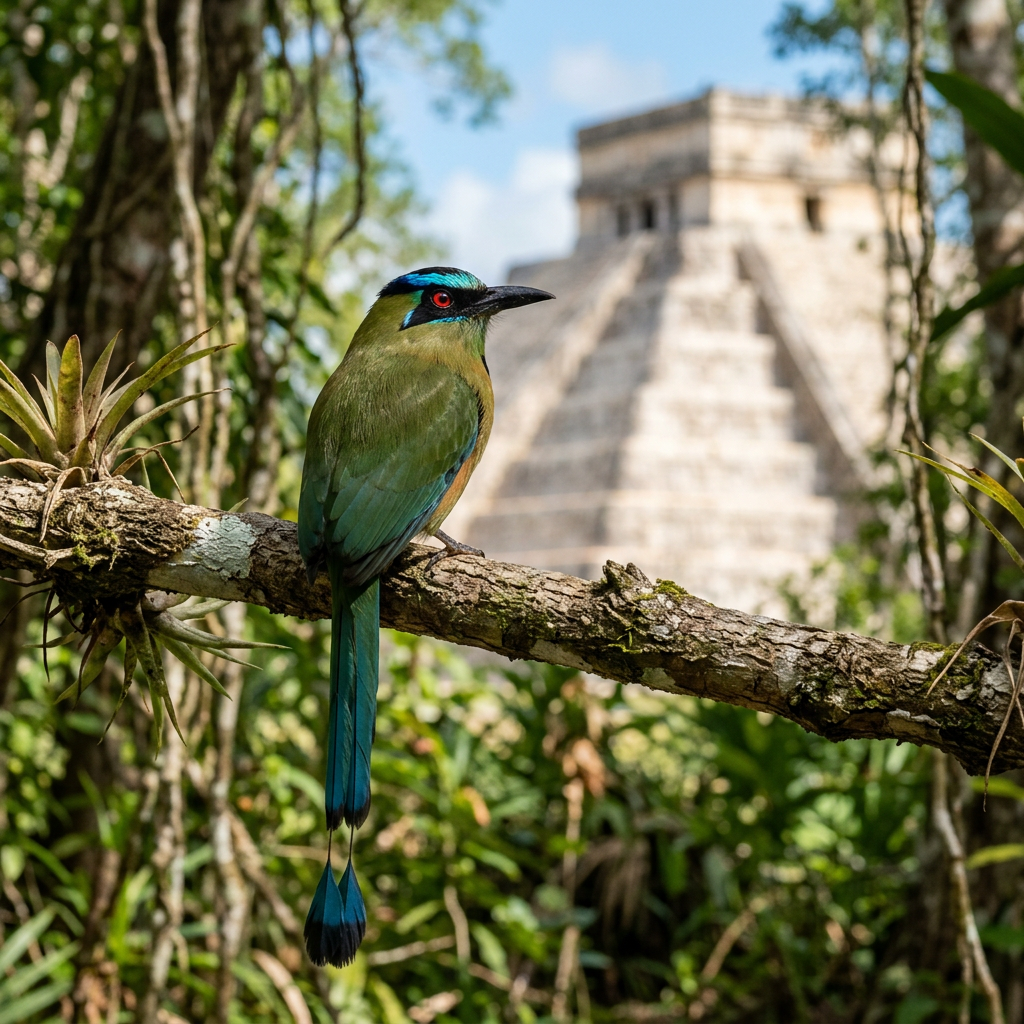
My son was busy climbing up the pyramid while I looked around. It didn’t take long and there was a Lesson’s Motmot (Momotus lessonii) of the Neotropic Motmots(Momotidae) family. A real stunner.
I thought that would be it, but low and behold, I came across another bird that would become part of a family that was separated from the Tyrant Flycatcher family. That bird was the Rose-throated Becard (Pachyramphus aglaiae) of the current Tityras and Allies (Tityridae) family.
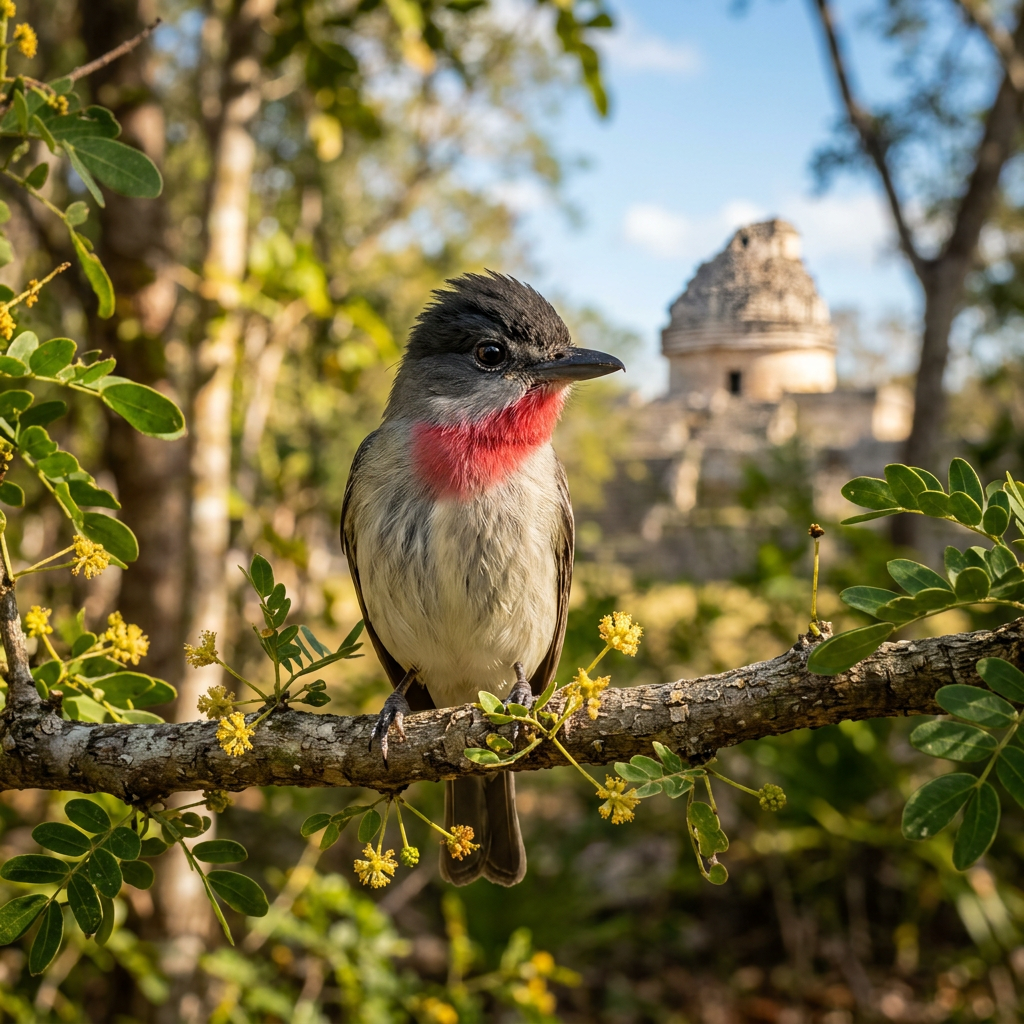
We then finished up our day there and headed back to Cancun where we stayed for 3 more nights, and some further excursions. My family was thrilled with this Xmas vacation and I was thrilled with what I had seen as well as their company.
Birding Summary
During my first trip into the Neotropical bird region, I was able to add 10 current day families to my list of families seen. Of those, 6 were exclusively Neotropical. I also 2 other families that were later absorbed into the current families that I saw.
During the full 2 week trip I saw a total of 138 species of birds, of which 55 were brand new for me.
My family was very happy as well. I am a very lucky man.